
Trace Butts County Former Owners by Era
Work from the newest grantee backward, one transfer at a time. The GSCCCA real-estate name search carries the modern party index, while the clerk's vault and archival collections hold the deeper record. Note that the county-specific coverage notice and the statewide banner disagree on dates. Treat those dates as access guides rather than guarantees for every book.
| Source | Years It Covers | Where Held | What It Shows |
|---|---|---|---|
| GSCCCA county index | County popup: 1920 to Sept. 2, 2026 | Online index | Party role, instrument type, dates, and recording reference |
| Clerk deed and plat books | Earlier material as held | 625 W. Third Street, Suite 10 | Conveyances, legal descriptions, and plats |
| Georgia Archives county cards | Book and reel ranges vary | Catalog and microfilm | Surviving series, gaps, and reel locators |
| Newspaper legal notices | Issue-specific | Digital Library of Georgia | Names, plats, bounds, and deed citations |
For a twentieth-century chain, test GSCCCA first and confirm the instrument with the clerk. For older chains, lean on the clerk's books and the Georgia Archives county-card catalog to find a surviving series.
Build a Butts County Deed-Chain Ledger
A backward timeline exposes the gaps. Add a row only when the legal description or another parcel-specific clue confirms the transfer. A surname match alone can attach the wrong land to your chain.
| Transfer date | Grantor to grantee | Deed type | Book and page |
|---|---|---|---|
| Newest filing | Prior owner to current grantee | As indexed | Copy exact reference |
| Earlier filing | Earlier grantor to that prior owner | Warranty, quitclaim, estate, or other type | Copy exact reference |
| Unresolved interval | Names not yet linked | Check estate, court, and plat clues | Mark last verified reference |
Never fill a gap from memory. Log spelling variants, party roles, county, search date, and the exact result you used, so the ledger stays reproducible.
Resolve Butts County's Two Index Dates
Two dates create confusion. The Butts-specific GSCCCA popup lists January 1, 1920 through September 2, 2026 and describes the index as running five days behind. The generic page, meanwhile, advertises system indexing from January 1, 1990. Record the discrepancy and verify coverage book by book.
Coverage caution: Use the county popup and clerk as the availability check. A banner does not prove every old instrument or image is complete online.
Kofile is the county-linked route to deed images, but viewing or printing requires an account and subscription. When the image gate stops the search, carry any visible book and page citation straight to the clerk.
Trace Back Butts County Deed Chains
The reverse method treats each known grantee as the next search name. Set County to Butts. Preserve the instrument type and date range. Check every result against the same tract before trusting it. The GSCCCA Butts County name search is the online form built for that party-role work.
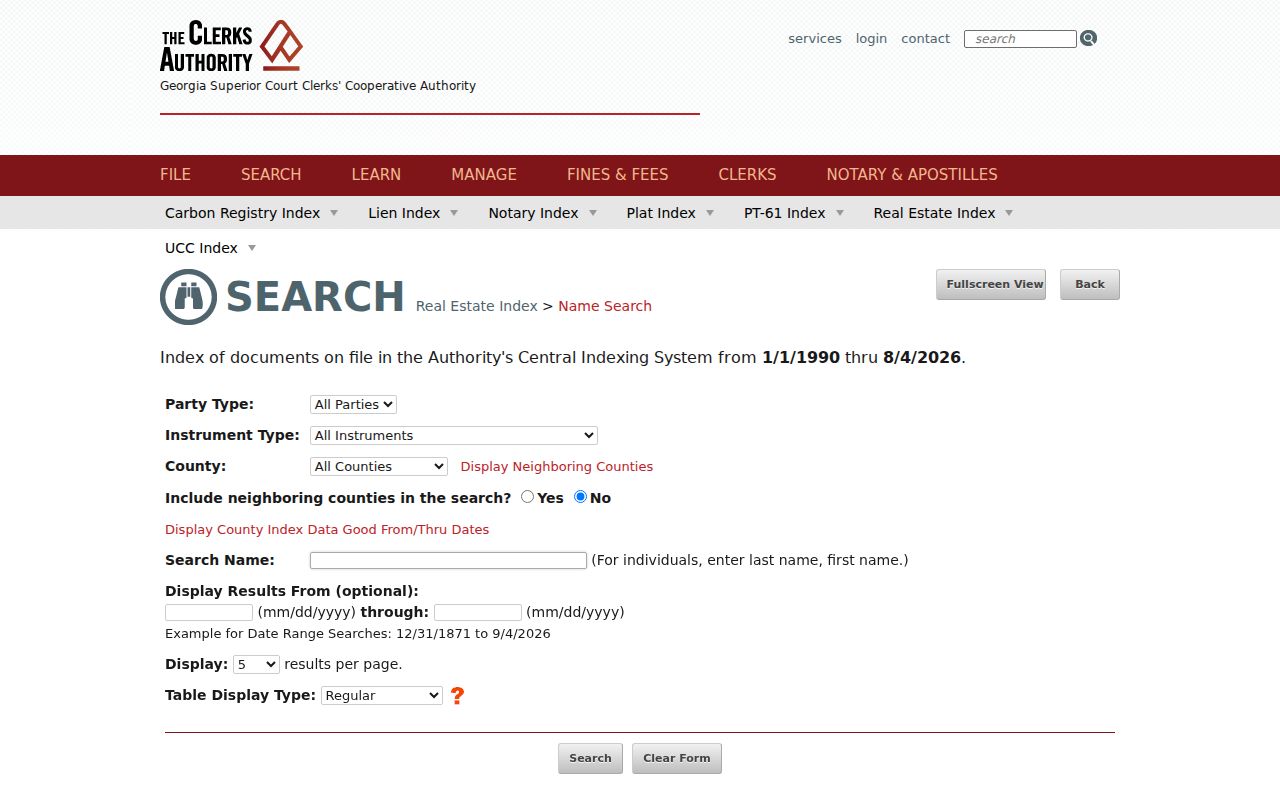
The official name-search form shows its search fields. Each conclusion still rests on matching the resulting deed to the same land. The form's Party Type control separates grantor, grantee, and all parties. Instrument Type can narrow results to warranty deed, quitclaim deed, deed from estate, deed of gift, foreclosure deed, sheriff's deed, tax sale deed, trustee's deed, right-of-way deed, or another indexed filing. Keep the first pass broad when terminology is uncertain. Narrow only after a likely name and date emerge. For a very short name, the form restricts the date span. Work in smaller periods and log each range you search.
- Find the newest acquisition deed with the current owner as grantee.
- Read the grantor and match legal description, acreage, plat, or book/page.
- Search that grantor as an earlier grantee and repeat the parcel match.
- At the online limit, take the last reference into deed books and microfilm.
- Grantor and grantee
- The parties conveying and receiving the stated interest.
- Chain of title
- The ordered sequence of transfers tied to one tract.
- Reverse index
- A party index used to find how a previous owner acquired the land.
- Quitclaim and warranty deed
- Different forms that must be recorded as found, without assumptions about title quality.
Anchor Previous Butts County Owners to Land
Old deeds often predate a modern street number. Anchor previous owners to the land itself. Match on lot and block, plat book and page, metes-and-bounds calls, road, acreage, adjoining owners, and later parcel keys. The GIS sample shows a hyphenated GSI_PIN and an unhyphenated parcel number. Both describe the same tract. Keep both. A plat earns its keep when a large tract was split. It may explain why one former owner's land became several parcels. The GSCCCA plat search and the clerk's records provide that bridge. Book and page searching helps when a later deed cites an earlier instrument. But surname variants defeat the party index. The GSCCCA book/page form demands County, Book, and Page, nothing less. Open the official book and page search with the exact reference copied from the deed or notice.
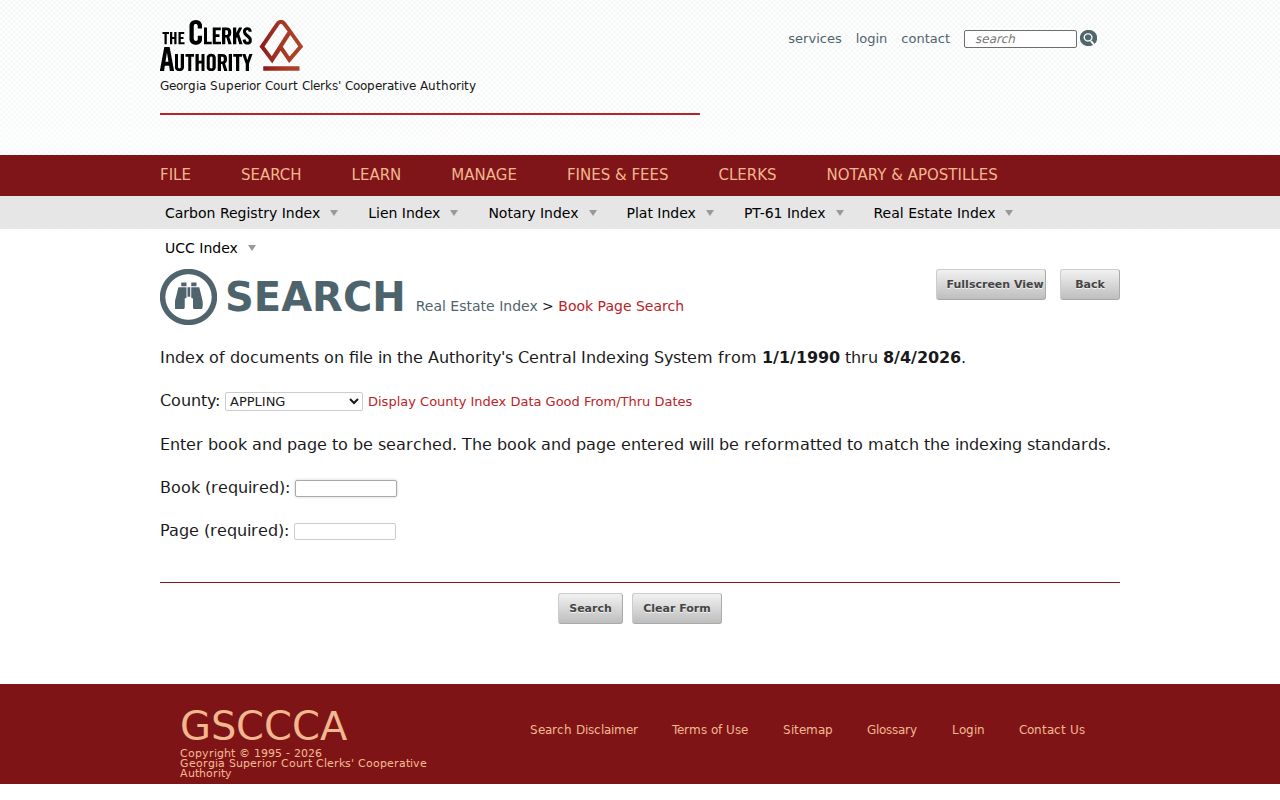
A precise citation on the official book and page form sidesteps surname variants entirely. It leads straight toward the older recorded instrument.
Note: Postal city, owner mailing city, and parcel jurisdiction can differ, so none should replace the recorded legal description.
Follow Butts County's Deed Book 19 Clue
One clue worth chasing sits in a March 20, 1969 Jackson Progress-Argus legal notice. It points to lot 18 and a 1952 plat. It also cites Deed Book 19 page 151 and metes-and-bounds language. The notice is not the deed. Still, it works as an index surrogate where no current address exists. Extract each name and reference. Search by party or book and page. Pull the plat and compare the land description against today's parcel. That turns archived news into a reproducible route to official former-owner records.
Reconstruct Butts County Estate Ownership
Estate transfers can snap a clean chain. When land passes through probate, search Probate Court by decedent and run the deed index for the estate, executor, administrator, heirs, and later grantees. Match the property schedule or legal description. Useful evidence may take the form of a year's-support order, executor deed, administrator deed, court-approved sale, survivorship deed, or title-clearing order. A will alone proves nothing. It does not confirm the probate and recording steps actually occurred.
Navigate Butts County's 1864 Record Loss
Butts County was formed in 1825. Sherman's 1864 campaign burned the courthouse that held its earliest papers. That loss sounds total, but it is not. Some land records survived. The Digital Library of Georgia's courthouse history plus the Archives county cards can show which series remain and where the gaps sit.
A chain that stops mid-century is common. Pin down the last verified deed, then work outward through tax digests, probate books, plats, FamilySearch images, and legal notices to bridge the missing transfer. The standing courthouse dates to 1898. Anything older depends on which book or reel happened to survive.
The Archives catalog holds microfilmed records for Butts County. These include tax digests, deed books, probate material, and court records. FamilySearch offers browsable county material too, including Butts petitions and orders from 1880 through 1899. Those images are not name searchable. Build a year, book, and page plan first, and note the first and last image you check. Two more routes exist. The Flint River Regional Library and the Butts County Historical Society both field research questions. Ask each directly about local directory and obituary holdings before making the trip.
Know How Far Butts County Ownership Goes
No single first-owner date covers every parcel. Butts County reports online deed searching back to 1920, older books vary, and the 1864 courthouse loss left tract-specific gaps. Ask the clerk which book you hold, and ask the Archives for the matching county card and reel details.
Lawful use. Butts County former-owner research supports house history, estate work, and property diligence. Never use living-person details to stalk, target, or harass anyone.
A reconstructed chain is not a title opinion. Flag every uncertain link and missing instrument honestly. For the parcel's present owner of record, use the Butts County current-owner check instead.
Not every transfer was a simple sale. When a chain crosses an estate, foreclosure, tax sale, or court order, name that instrument type rather than forcing the event into a deed-to-deed narrative. Search the related probate or court files for the missing transfer evidence. Keep restricted vital records separate from the public land record, though. A death certificate can establish identity for an eligible requester, but the recorded executor deed or court order is the document that ties the estate event to the parcel.